VIDEOSCOPY
Videoscopy
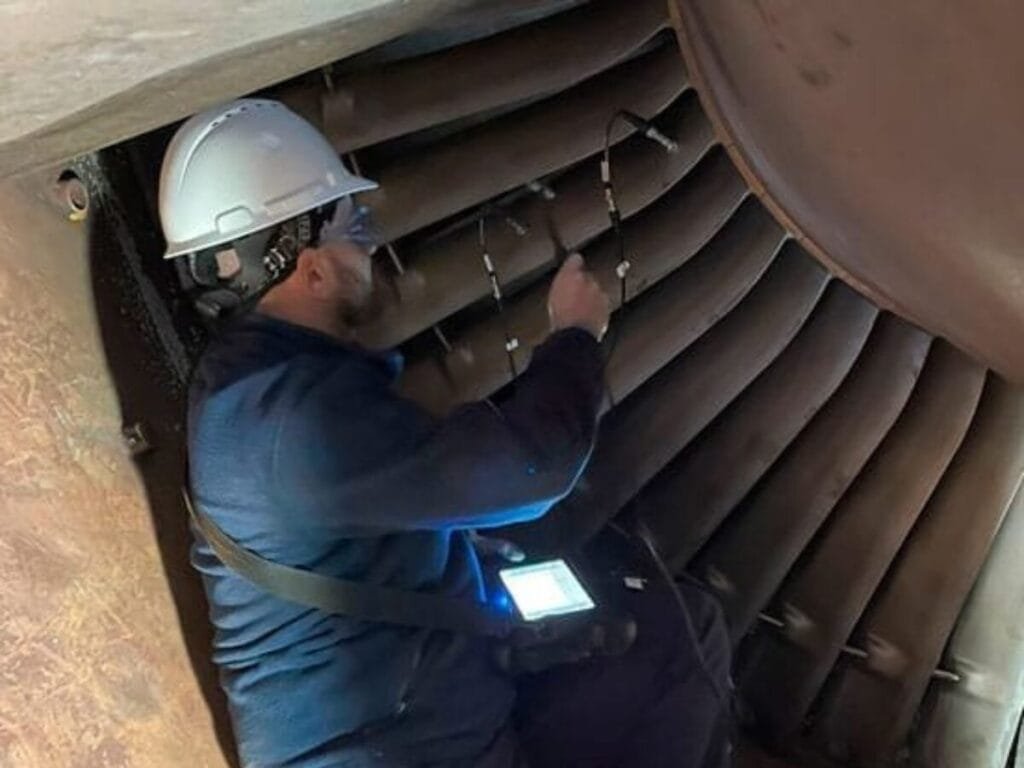
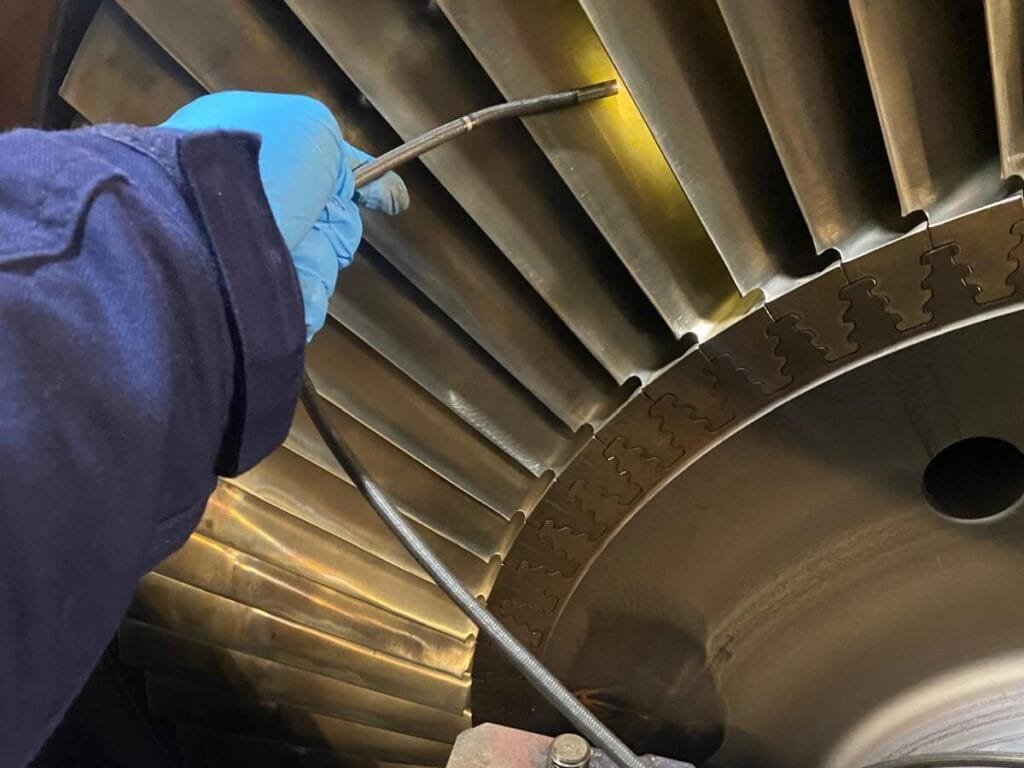
Videoscopy is a remote visual inspection service that makes it possible to observe the internal condition of equipment, components, and hard-to-access areas without extensive disassembly or major openings.
The service includes access planning, insertion of a videoscope or borescope, image and video capture, anomaly identification, criticality classification, findings recording, and issuance of a technical report with maintenance, repair, or follow-up recommendations.
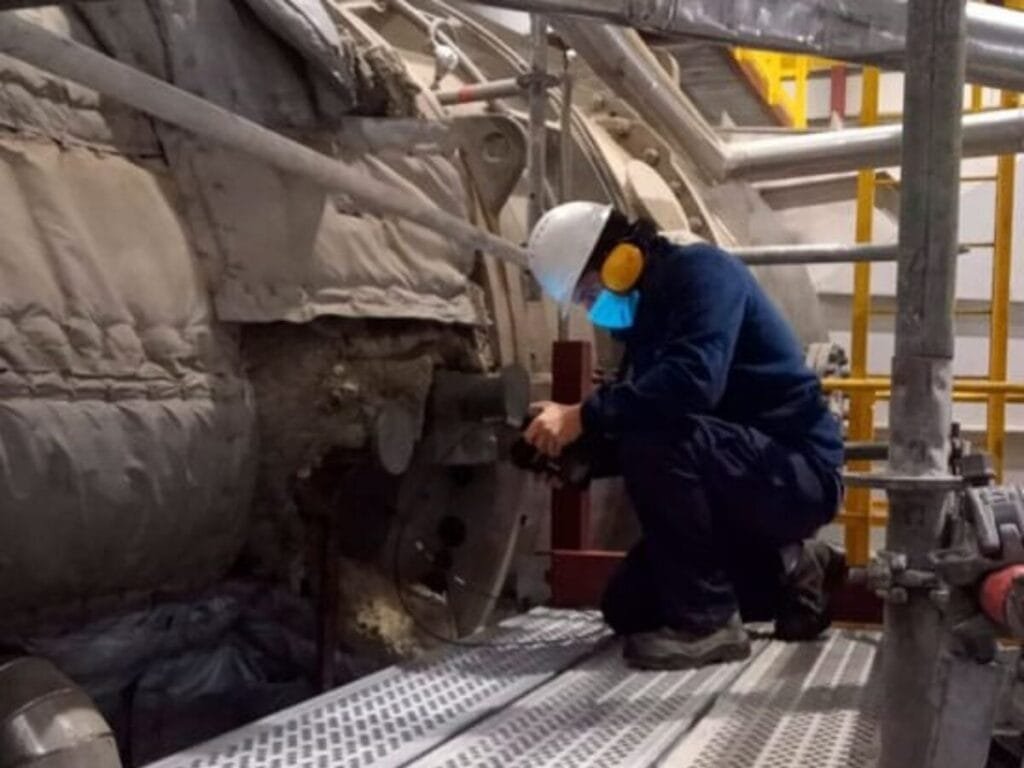
Service Objectives
✅ Inspect the interior of assets without resorting, unless justified, to full disassembly or invasive openings.
✅ Detect at an early stage wear, corrosion, visible cracks, deposits, obstructions, clearances, and surface damage before they develop into a major failure.
✅ Reduce diagnostic time during scheduled outages, start-ups, troubleshooting, and post-intervention verifications.
✅ Improve maintenance decision-making with traceable visual evidence: images, video, and defect location.
✅ Minimize operational and safety risks by avoiding unnecessary access to confined, hot, or hard-to-reach areas when remote inspection is feasible.
✅ Prioritize repairs and spare parts based on the asset’s actual condition, not only on time-based intervals or intuition.
What Problems Do We Detect?
Scale, fouling, and deposits in piping, heat exchangers, valves, and ducts.
Internal corrosion, pitting, and material loss in casings, coils, piping, and process equipment.
Visible cracks, nicks, deformation, or impact damage on blades, nozzles, accessible welds, and internal surfaces.
Abnormal wear on impellers, rotors, diffusers, seats, guides, and sealing elements.
Partial or total blockages caused by foreign objects, solidified product, or process residue.
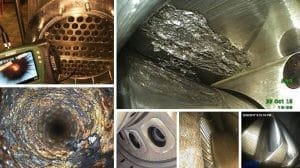
Damage to coatings, internal insulation, refractories, or surface protections.
Signs of cavitation, erosion, or rubbing in pumps, valves, and hydraulic equipment.
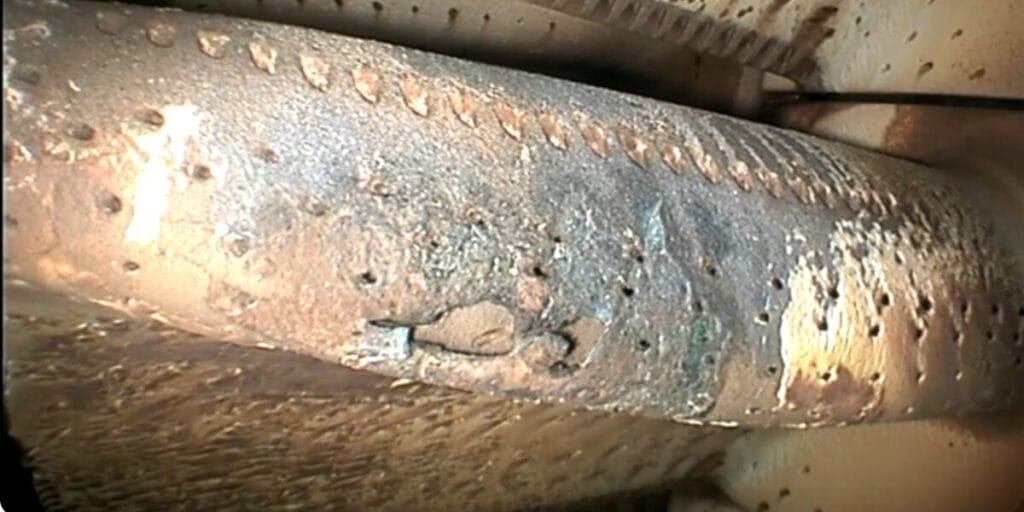
Incipient leaks or leak traces: marks, streaking, crystallization, carbonization, or localized moisture.
Visible misalignments, improper contact between parts, or geometric interferences in accessible areas.
Assembly or previous repair defects: missing bolts, poorly seated parts, damaged seals, or loose elements.
What Type of Plant/Equipment Is Suitable for This Service?
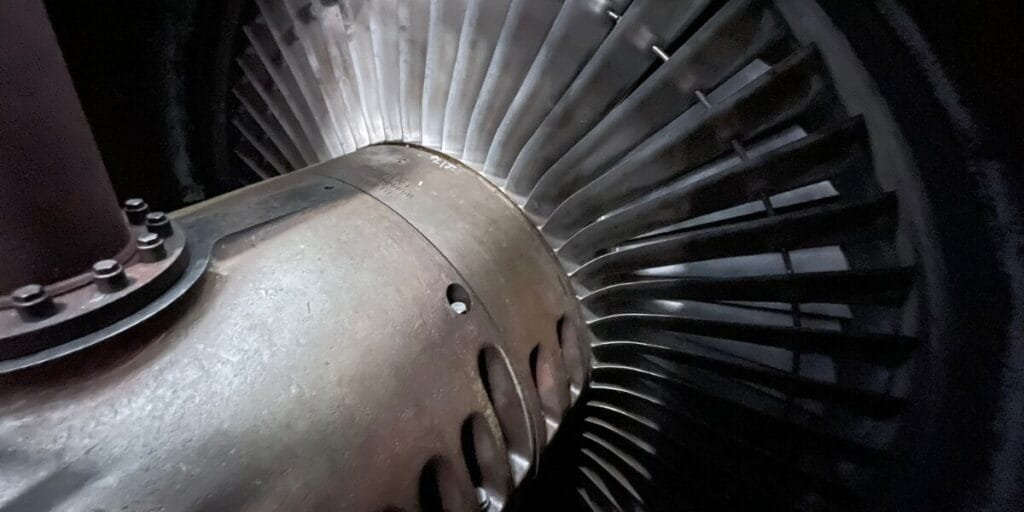
Rotating equipment: turbines, compressors, centrifugal pumps, blowers, gearboxes, fans, motors, and generators when it is necessary to inspect internal ventilation, casing, impeller, blades, or accessible lubrication areas.
Static equipment: heat exchangers, boilers, vessels, columns, tanks, reactors, and condensers.
Process and piping: valves, pipelines, elbows, manifolds, steam lines, process lines, and drains where deposits, corrosion, or foreign bodies may be present.
Power generation: gas and steam turbines, HRSGs, auxiliary systems, generators, control valves, and cooling circuits.
Utilities: industrial HVAC systems, ducts, stacks, fire protection systems, air lines, and vacuum lines.
Sectors with high applicability: power generation, Oil & Gas, chemicals, pulp and paper, metallurgy, food processing, desalination, mining, and pumping plants.
Specific asset examples: motors, pumps, turbines, valves, generators, heat exchangers, gearboxes, and piping, and much more..
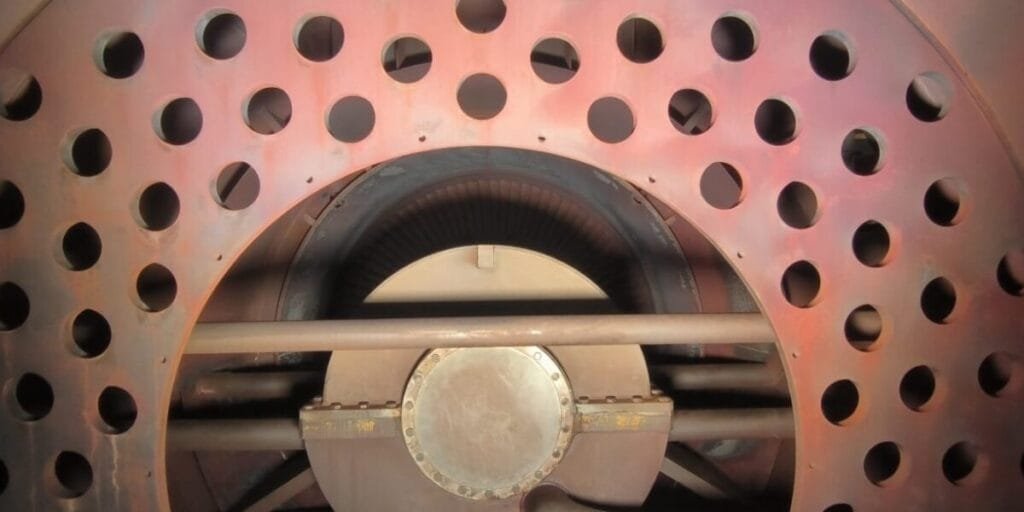
Case Study:
Read about a real-life case in which videoscopy technology made it possible to accurately identify internal defects in machinery without having to disassemble it.
Frequently Asked Questions
Not always. Its greatest value lies in reducing exploratory disassembly and narrowing down the problem. When it detects a relevant defect, it helps decide whether it is best to repair, continue monitoring, or open the equipment with a clearly defined scope.
It depends on the asset, temperature, pressure, access point, and safety requirements. In many cases it is performed during a short scheduled outage; in others, it can be carried out on equipment that is out of service without affecting the entire plant.
It provides documented visual evidence in areas where direct inspection is not feasible. Its accuracy depends on access, cleanliness, lighting, equipment diameter, and technician experience, so it should be integrated with operating context and, where appropriate, other predictive maintenance techniques.
Normally: asset identification, available access points, process conditions, work permits, risk assessment, EHS requirements, and expected acceptance criteria. In ATEX areas or confined spaces, preventive preparation is especially important.
No. It is also highly useful in valves, small-diameter lines, gearboxes, internal cavities, ducts, and auxiliary components where conventional visual inspection is limited or inefficient. Its value depends more on access difficulty and asset criticality than on equipment size.
Yes. In fact, it usually provides more value when combined with vibration analysis, thermography, ultrasound, oil analysis, or process data. In this way, videoscopy helps visually confirm a symptom detected by another technique and improves intervention prioritization.
Industrial Sectors