
MI2992 POWER ANALYSER
MI 2992 Power Analyser
The MI 2992 Power Analyser is a portable three-phase Class A power quality analyzer designed for logging campaigns, incident diagnostics, and advanced field analysis of electrical networks. Its 10.1” TFT touchscreen, step-by-step wizard, and direct on-instrument analysis reduce complexity for maintenance, engineering, and commissioning teams.
In addition to measuring power, energy, and power quality, it allows review of trends, events, transients, RVC, and inrush currents, with MPVision software support for post-analysis and reporting.
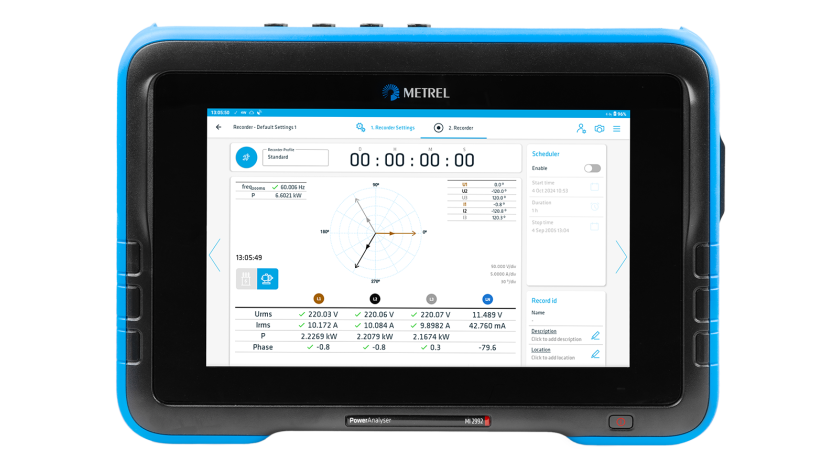
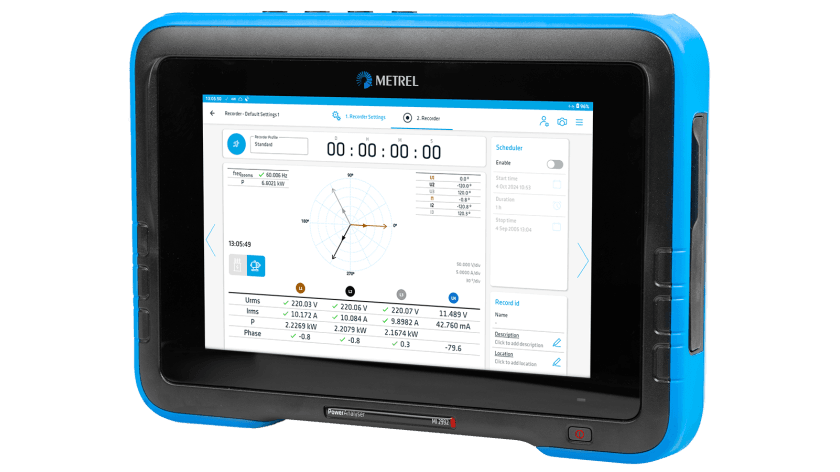
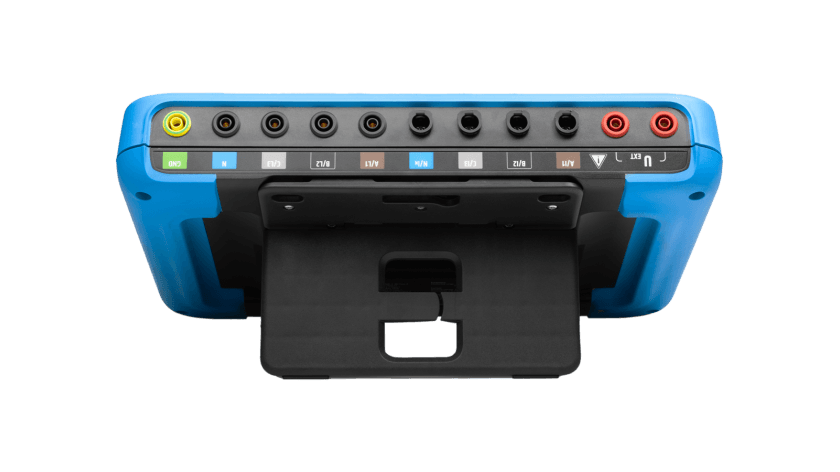
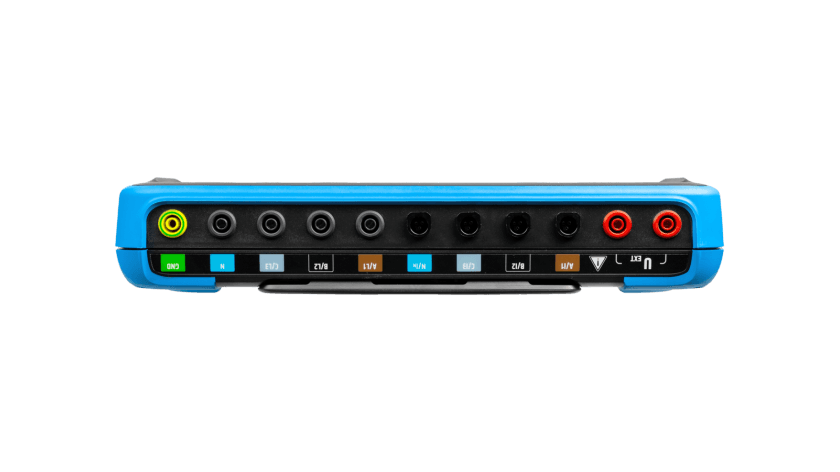
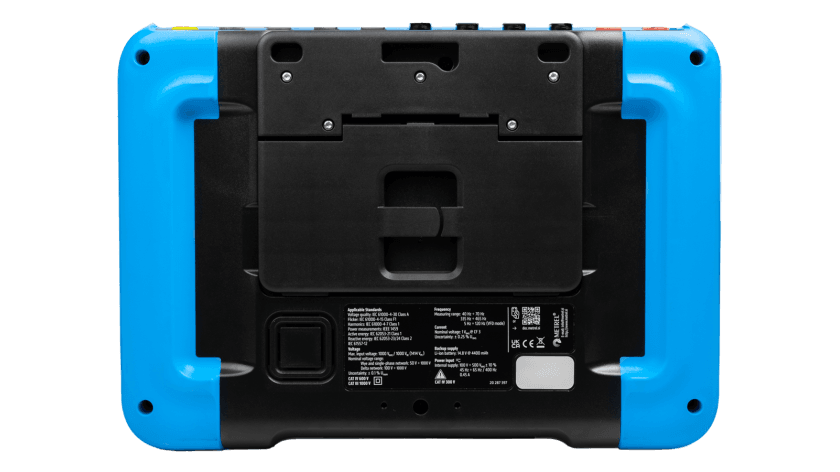
Measures voltage, current, power, energy, unbalance, flicker, and power factor.
Analyzes harmonics and interharmonics up to the 63rd order and supraharmonics from 2.1 to 14.9 kHz.
Captures power quality events: dips, swells, interruptions, RVC, transients, alarms, and start-ups.
Supports multiple connection schemes: 1W, 2W, 3W, open delta, 4W, INV-3W, and INV-1W.
Enables live and historical local analysis without always depending on a PC.
Simplifies data download and reporting via USB-C, Ethernet, Wi‑Fi, Bluetooth, and MPVision software.
Analyzes harmonics and interharmonics up to the 63rd order and supraharmonics from 2.1 to 14.9 kHz.
Captures power quality events: dips, swells, interruptions, RVC, transients, alarms, and start-ups.
Supports multiple connection schemes: 1W, 2W, 3W, open delta, 4W, INV-3W, and INV-1W.
Enables live and historical local analysis without always depending on a PC.
Simplifies data download and reporting via USB-C, Ethernet, Wi‑Fi, Bluetooth, and MPVision software.
Captures power quality events: dips, swells, interruptions, RVC, transients, alarms, and start-ups.
Supports multiple connection schemes: 1W, 2W, 3W, open delta, 4W, INV-3W, and INV-1W.
Enables live and historical local analysis without always depending on a PC.
Simplifies data download and reporting via USB-C, Ethernet, Wi‑Fi, Bluetooth, and MPVision software.
Ideal for:
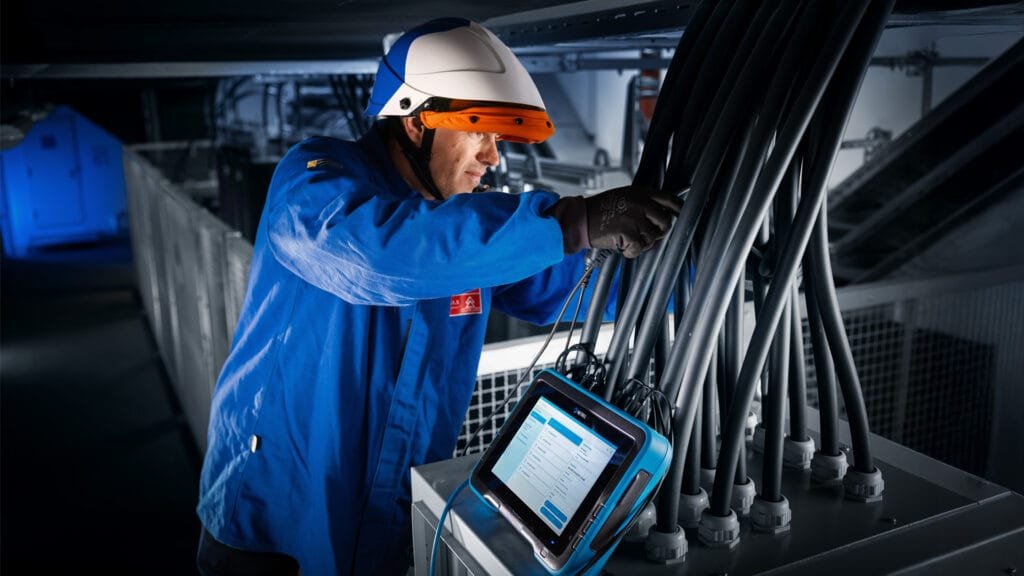
Electrical engineers and maintenance managers who need diagnostics with standards-based traceability.
Power quality audits in industry, utilities, hospitals, and critical infrastructure.
Teams that need to combine field measurement, long-term logging, and professional reporting.
Not ideal for:
Users who only need a basic clamp meter or simple spot measurements.
Projects that do not require power quality analysis, event capture, or Class A compliance.
Benefits
Faster diagnosis of electrical faults — thanks to live analysis, historical review, and simultaneous capture of events, RVC, transients, and start-ups.
Greater confidence in critical measurements — due to compliance with IEC 61000-4-30 Class A and support for recognized analysis standards.
Reduced field setup effort — thanks to the step-by-step wizard and predefined and custom logging profiles.
Broader analysis coverage in a single platform — by combining power, energy, flicker, unbalance, harmonics, interharmonics, and supraharmonics.
Better ability to detect root causes — because it correlates electrical variables with recorded trends, alarms, and events.
More flexible plant operation — due to direct power supply from voltage terminals, Li-ion battery, and multiple communication interfaces.
Easier integration into the technical team’s workflow — through export to .xls and .csv, plus automatic reporting from MPVision.
Applications
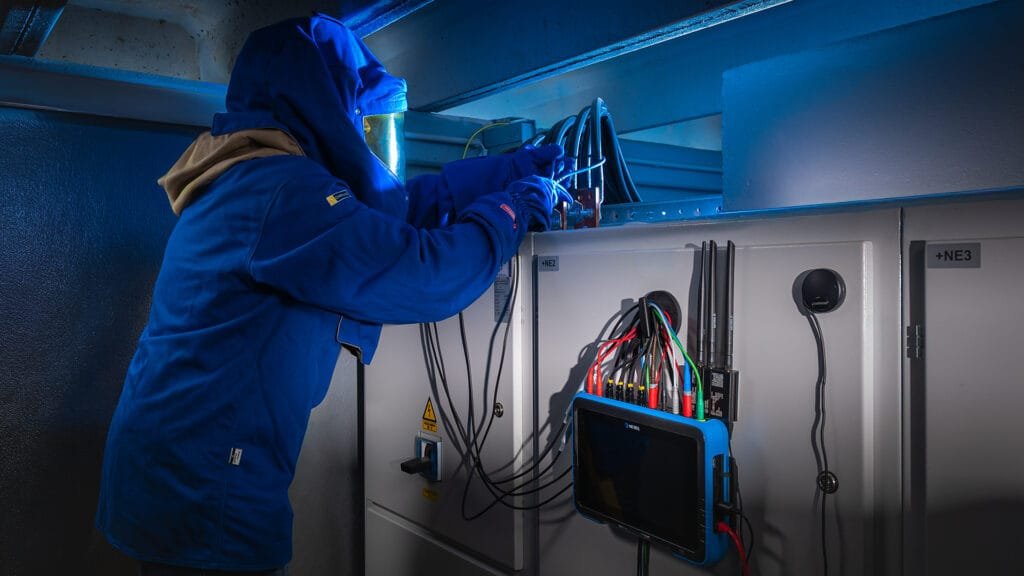
Diagnosis of power quality problems in the plant — when nuisance tripping, drive failures, overheating, or erratic load behavior occur, the MI 2992 records voltages, currents, harmonics, unbalance, and events to identify the cause based on measurable evidence rather than approximation. Result: less diagnostic time and better-supported corrective decisions.
Logging campaigns for compliance and auditing — in networks where performance must be validated according to IEC/EN 61000-4-30 Ed. 3.0, EN 50160, or IEEE 519, the instrument enables long-term recording, data aggregation, and automated reporting. Result: technical evidence useful for quality of service, internal audits, or supplier assessment.
Commissioning, troubleshooting, and analysis in critical infrastructure — in hospitals, data centers, utilities, buildings, and process industry applications, the combination of live analysis, historical review, inrush current analysis, and event capture helps verify operating stability and the behavior of sensitive loads. Result: lower risk of interruptions and better visibility into the actual condition of the network.
What does it include?
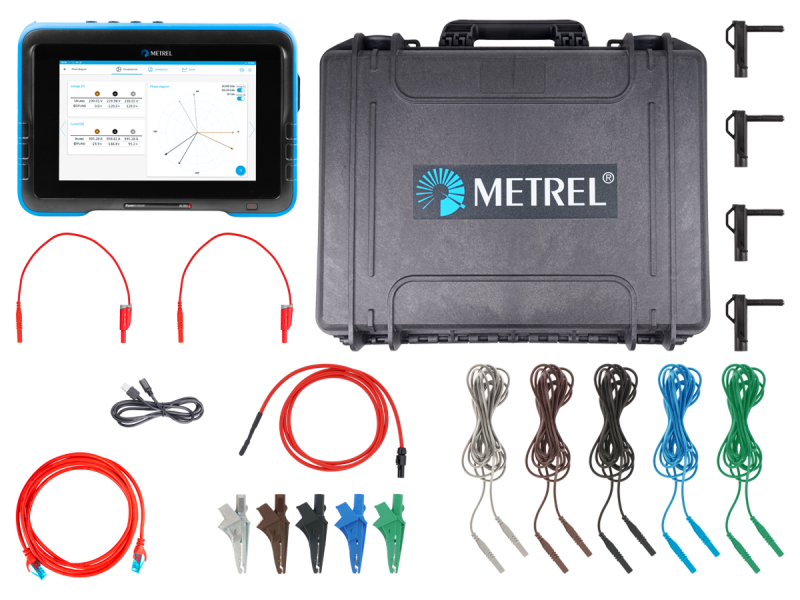
- Main unit: MI 2992 Power Analyser.
- Accessories: 4 A1778 test probes with magnetic tip, alligator clips by phase/color, A1459 test lead, 2 A1811 cables, A1851 power cable, A1812 USB cable, A1767 Ethernet cable, A1776 hard case.
- Consumables: not primarily applicable.
- Additional probe included: A1354 temperature probe.
- Certificates / calibration: calibration certificate included.
- Manuals / licenses: instruction manual + MPVision PC software.
Technical information
Download the MI 2992 Power Analyser datasheet, a portable Class A solution for power quality diagnostics, harmonics analysis, event capture, and logging campaigns.
Frequently Asked Questions
The instrument is intended for Class A power quality analysis in accordance with IEC/EN 61000-4-30 Ed. 3.0. 3.0. For voltage, it supports up to 1000 V RMS on 4 channels; the current range depends on the clamp used.
Yes, the standard kit indicates that a calibration certificate is included. If your process requires specific certificates, it is advisable to confirm the required scope, traceability, and calibration interval before purchase.
Yes, in operational terms: it exports data to .xls and .csv, uses MPVision, and includes USB, Ethernet, Wi‑Fi, and Bluetooth. Native integration with specific third-party platforms should be validated case by case.
It is powered directly from voltage terminals with a range of 85–500 V AC and also includes a Li-ion battery. Detailed environmental conditions, IP rating, and operating temperature should be reviewed in the full technical documentation.
Yes. The manufacturer positions it for both long-term logging and troubleshooting, with local analysis on the instrument itself and reporting through MPVision.
Yes, it is suitable for engineering, maintenance, utilities, hospitals, and industry applications requiring standards-based traceability, harmonics analysis, event capture, and serious diagnostics. It is not the best option if only basic electrical measurements are required without power quality analysis.