
ULTRASOUND
Ultrasound
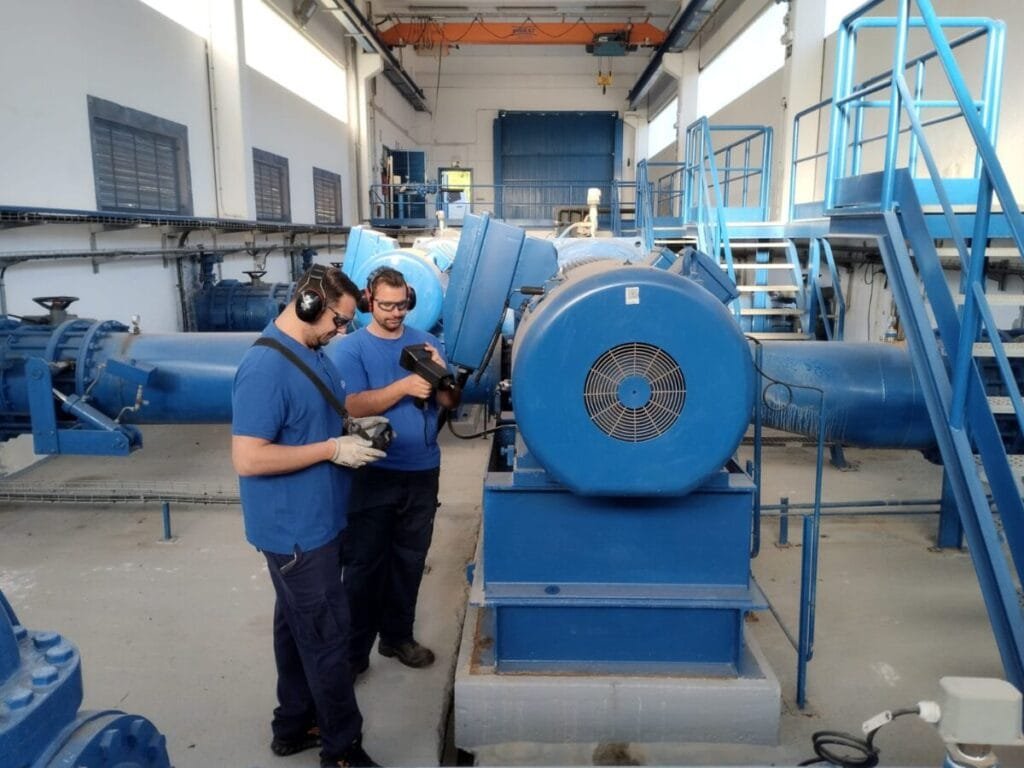
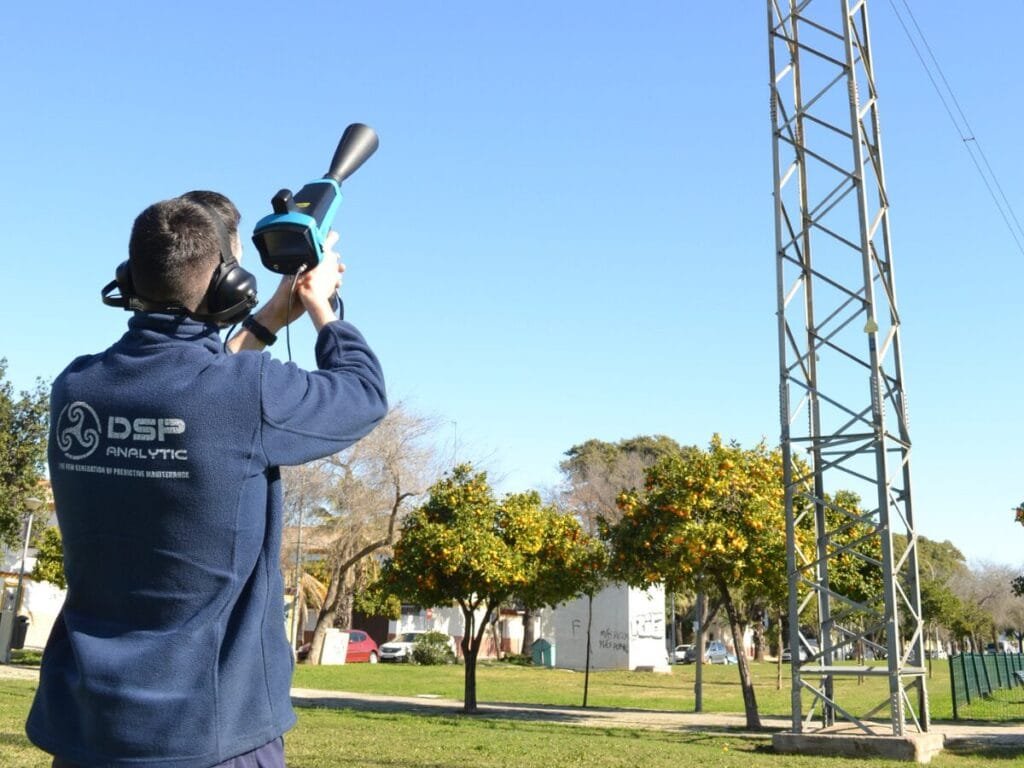
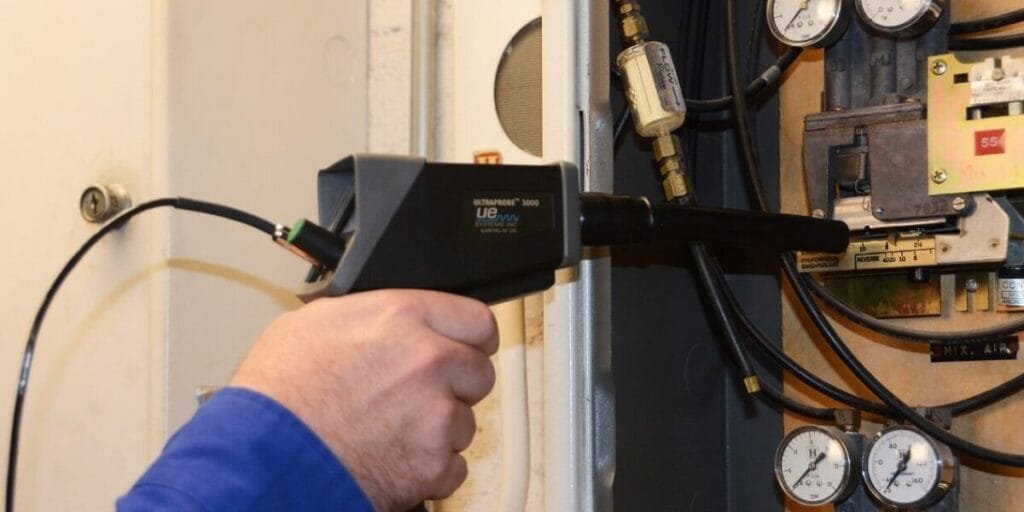
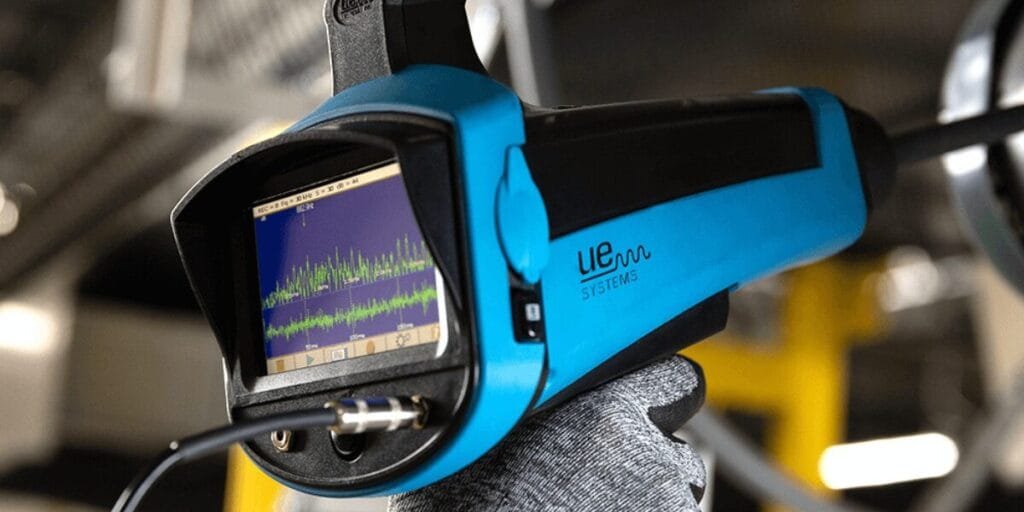
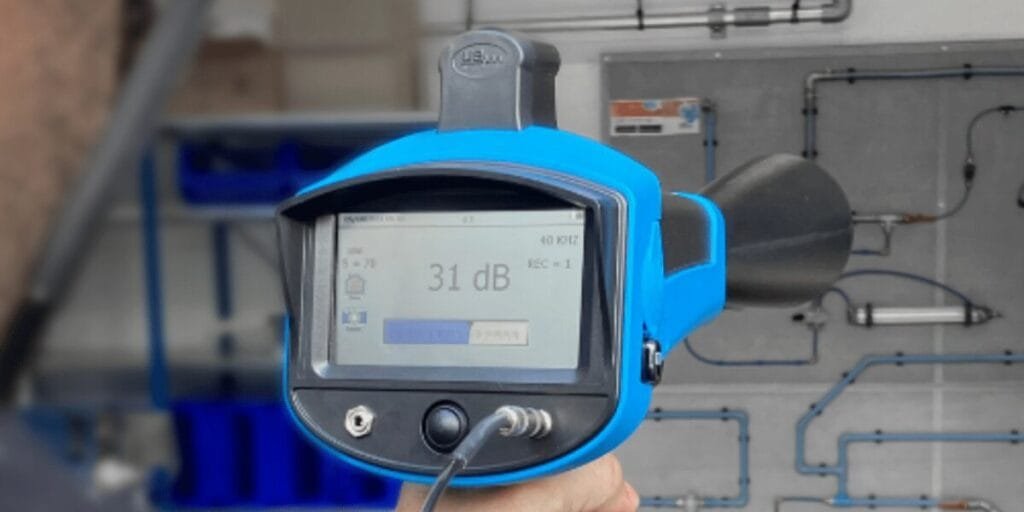
The ultrasound service consists of asset inspection and diagnosis through the detection of ultrasonic signals, both airborne and contact-based, in order to identify anomalies that are usually neither audible nor visible in their early stages.
In predictive maintenance, it is especially useful for locating leaks, assessing the condition of bearings and gears, checking valves and steam traps, and detecting certain electrical defects before they evolve into functional failure.
ISO 29821:2018 provides guidelines for the ultrasonic examination of machines, data interpretation, and severity assessment criteria.
The service is delivered through inspection routes, spot measurements, and comparative trend analysis. It may include: contact listening and measurement on bearings, airborne inspection of air/gas/vacuum leaks, inspection of steam traps and valves, checks on electrical panels and equipment, condition-based lubrication adjustment, and issuance of a report including criticality, recommendations, and intervention priorities.
Service Objectives
✅ Detect incipient faults in bearings, gears, and friction elements before they generate high vibration, abnormal temperature, or downtime.
✅ Identify and quantify compressed air, gas, or vacuum leaks that penalize energy consumption and process stability.
✅ Verify the operation of steam traps, valves, and drains to reduce energy losses and operating problems.
✅ Optimize condition-based greasing, avoiding both insufficient lubrication and over-lubrication.
✅ Improve safety and operational continuity through inspections without disassembly and, in many cases, without stopping production.
✅ Prioritize maintenance actions based on trend data, asset criticality, and operational risk.
What Problems Do We Detect?
Early-stage bearing damage caused by friction, impact, or poor lubrication.
Over-greasing or lack of grease in manually lubricated bearings.
Wear or impact in gears, especially in early stages.
Compressed air leaks at fittings, hoses, valves, quick couplings, and seals.
Vacuum leaks in process lines, suction cups, pick-and-place systems, and packaging equipment.
Losses in steam systems due to steam traps stuck open/closed or valves with poor sealing.
Arcing, tracking, or corona in certain electrical components, when accessibility and inspection conditions allow it.
Cavitation, turbulence, or abnormal flow through valves and fluid circuits.
Increased friction in conveyors, couplings, pulleys, or guides.
Intermittent faults that are difficult to detect using other techniques.
What Type of Plant/Equipment Is Suitable for This Service?
Rotating equipment
- Electric motors
- Centrifugal and vacuum pumps
- Fans and exhausters
- Gearboxes and speed increasers
- Compressors
- Bearings in conveyors, roller tables, and process lines
Process equipment and auxiliary services
- Compressed air networks
- Vacuum systems
- Headers, manifolds, and distribution lines
- Manual and automatic valves
- Steam traps and drains
- Heat exchangers and lines at risk of abnormal flow
Plants and industries where it adds significant value
- Power generation
- Food and beverage
- Pulp and paper
- Oil & gas
- Chemical and petrochemical
- Mining, cement, metallurgy, and automotive
- Any plant with high compressed air or steam consumption
Case Study:
Explore a real-world example of ultrasound technology applied in an industrial setting and its usefulness in detecting anomalies, improving reliability, and enhancing maintenance operations.
Frequently Asked Questions
No. It is a complementary technique. It is usually especially effective for leaks, lubrication, steam traps, valves, and early detection in bearings; vibration analysis and thermography complete the diagnosis depending on the failure mode.
Normally not. A large part of the value of ultrasound lies in inspecting equipment while it is running and detecting condition changes without disassembly.
Yes. When properly applied, it makes it possible to move from calendar-based greasing to condition-based greasing, reducing both under-lubrication and over-lubrication.
It depends on the type of plant, but it is usually high when there are compressed air networks, steam systems, or many manually lubricated bearings. Energy savings and the reduction of incipient failures usually justify the campaign quickly.
It depends on the asset and the objective of the inspection. Typically, the intensity of the ultrasonic signal, its trend over time, the behavior of the demodulated or heterodyned sound, and, in mechanical equipment, changes associated with friction, impact, or lack of lubrication are assessed. In bearings, for example, the focus is not only on an isolated value, but on its evolution relative to the asset’s own baseline and its correlation with load, speed, and operating conditions.
Ultrasound is very sensitive, but that sensitivity requires method. Diagnostic quality can be affected by background noise, poor accessibility, load differences, variable speed, or the absence of historical references. To minimize errors, we establish repeatable routes, use the appropriate sensor—airborne or contact—compare equivalent assets, record trends, and, when the finding is critical, corroborate it with other techniques such as vibration analysis, thermography, or process inspection.
Industrial Sectors