
VIBRATION ANALYSIS
Vibration Analysis
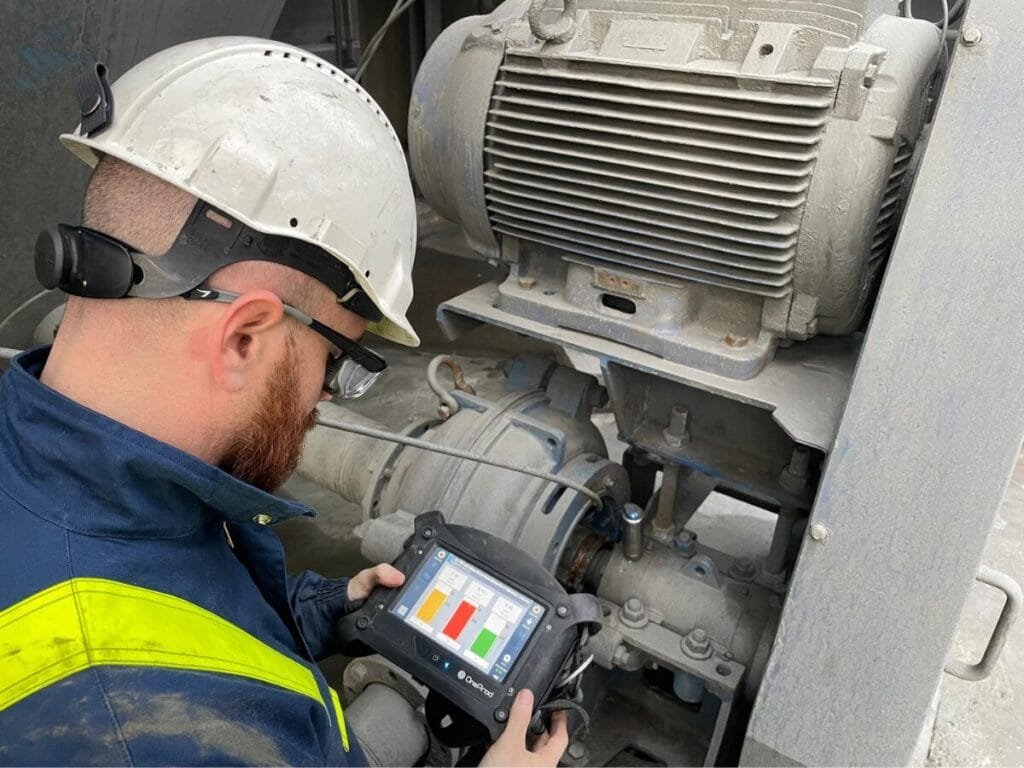
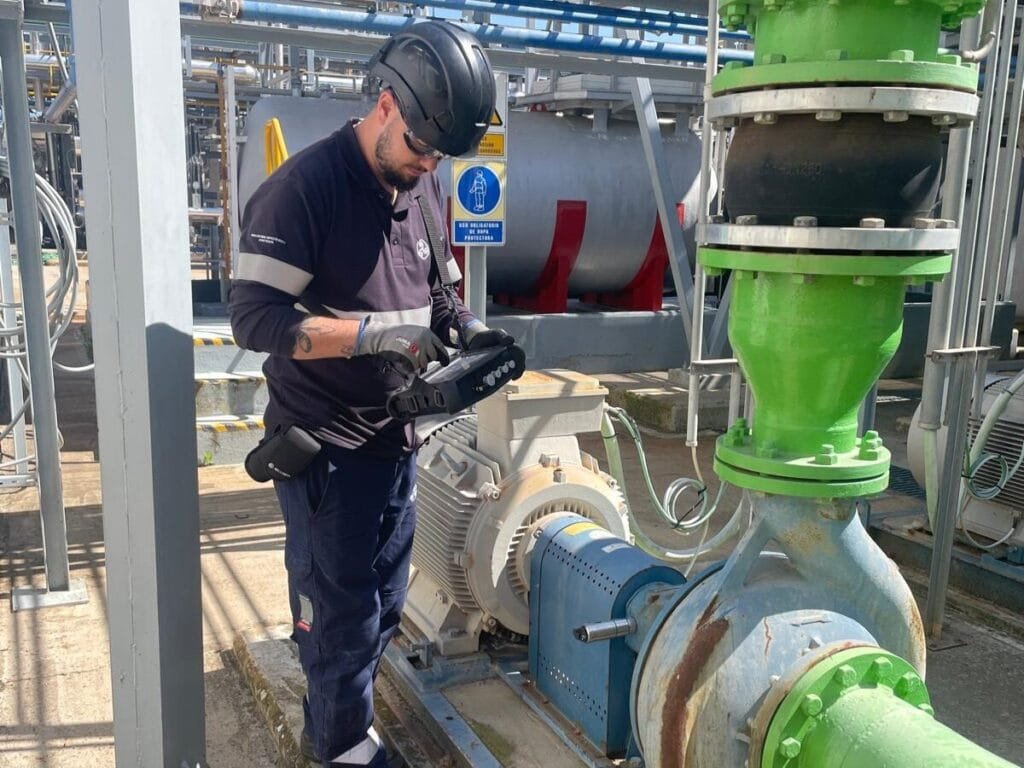
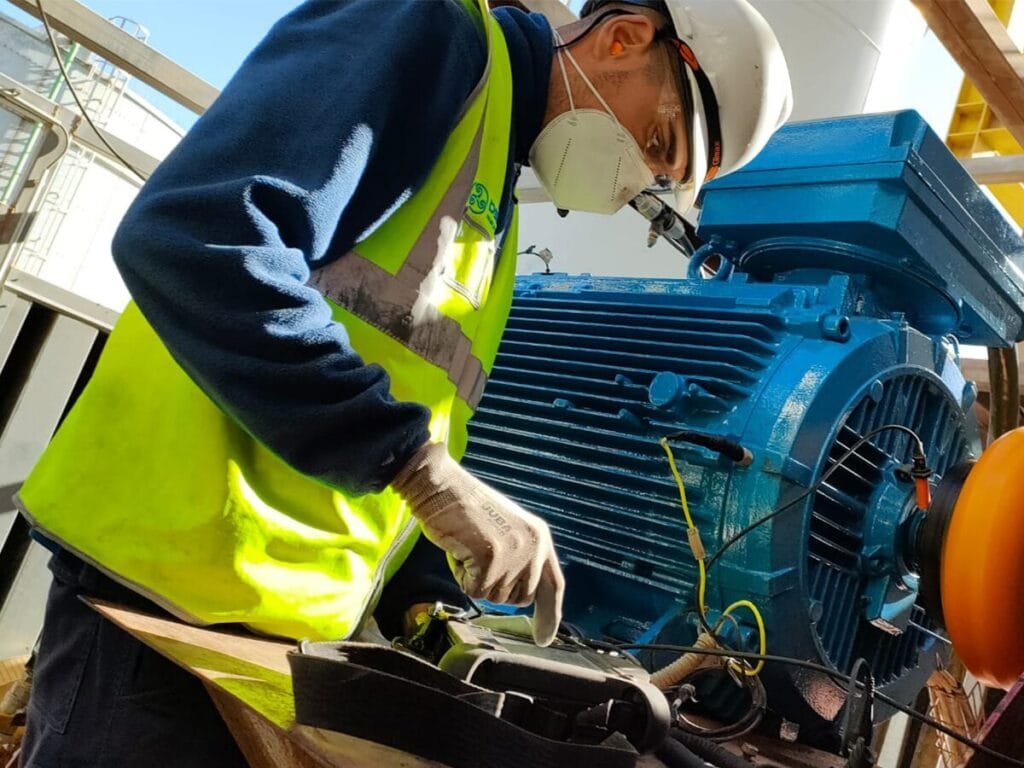
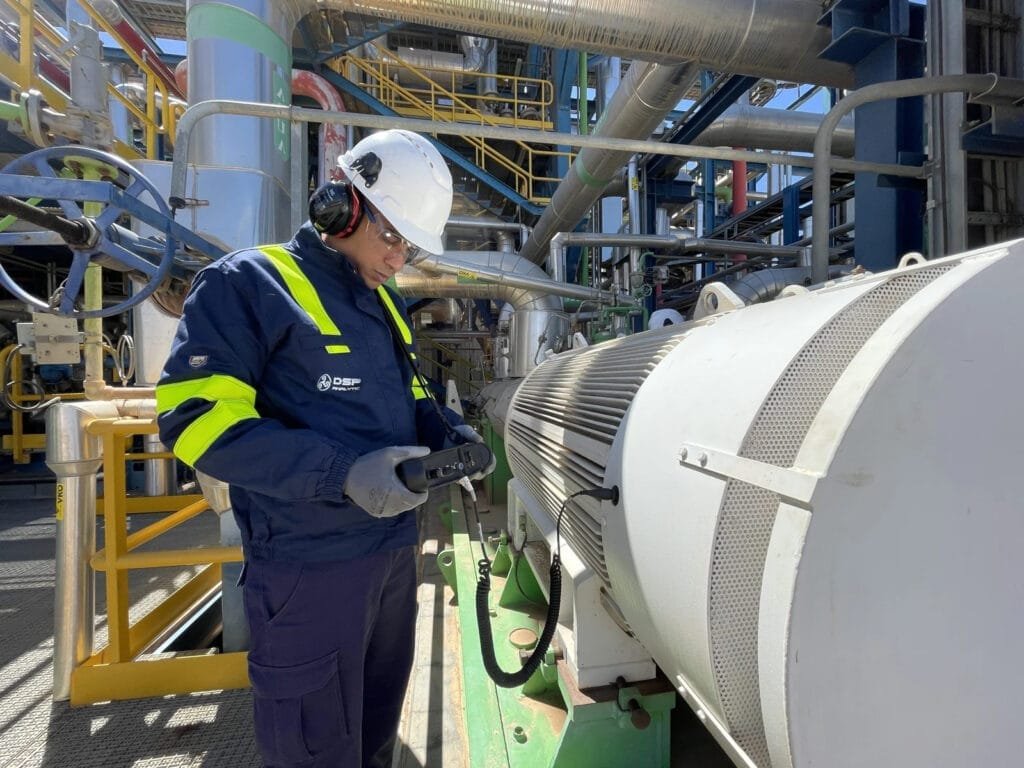
Vibration analysis is a condition monitoring service that measures and studies the dynamic behavior of a machine in operation in order to identify incipient mechanical, electrical, or process defects.
It is based on signals captured at bearings, housings, supports, or shafts, and their interpretation in the time and frequency domains.
In practice, the service includes defining routes or measurement points, data acquisition with portable instrumentation or continuous monitoring systems, spectral and trending analysis, diagnosis, risk prioritization, issuance of a technical report, and action recommendations.
For critical assets, it can be complemented with permanent monitoring and correlation with other process variables.
Service Objectives
✅ Detect incipient failures before they cause an unplanned shutdown.
✅ Prioritize interventions according to criticality, severity, and defect progression.
✅ Reduce catastrophic failures in bearings, couplings, shafts, and power transmission elements.
✅ Improve the availability and reliability of critical rotating equipment.
✅ Optimize maintenance windows, spare parts, and intervention resources.
✅ Provide technical criteria to decide whether to continue operating, correct, align, balance, or inspect during shutdown.
What Problems Do We Detect?
Rotor unbalance.
Misalignment between the motor and the driven machine.
Mechanical looseness and structural or base looseness.
Bearing failures in early and advanced stages.
Defects in gears and transmission elements.
Lubrication problems or degradation of the lubricating film.
Bent shafts or eccentricities.
Resonances, critical speeds, and structural amplification.
Problems in belts, pulleys, and slippage.
Certain electrical faults reflected in vibration, such as electromagnetic asymmetries or motor-related excitations.
What Type of Plant/Equipment Is Suitable for This Service?
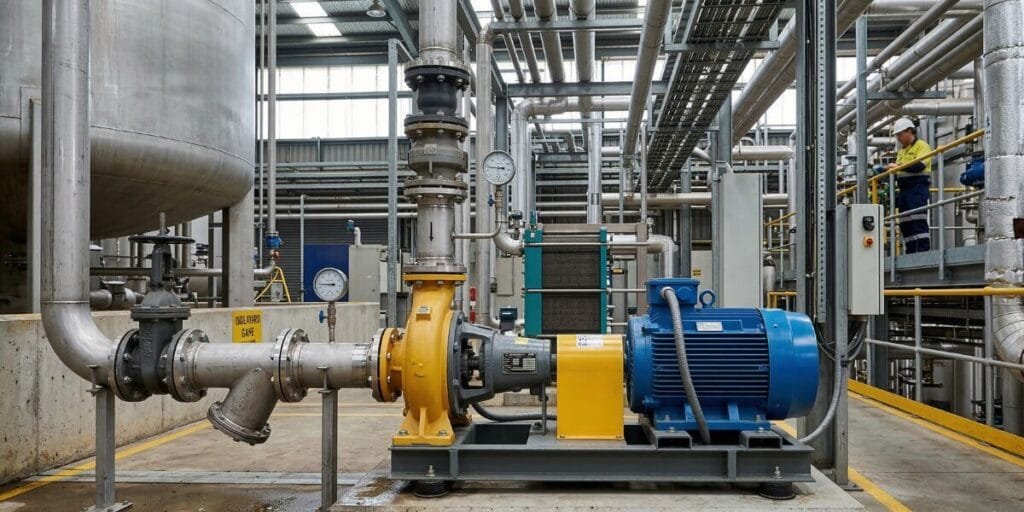
General rotating equipment: centrifugal pumps, fans, exhaust fans, blowers, compressors, gearboxes, agitators, mixers.
Motors and driven trains: electric motors, motor-pump sets, motor-fan sets, motor-gearbox sets, assemblies with flexible or rigid couplings.
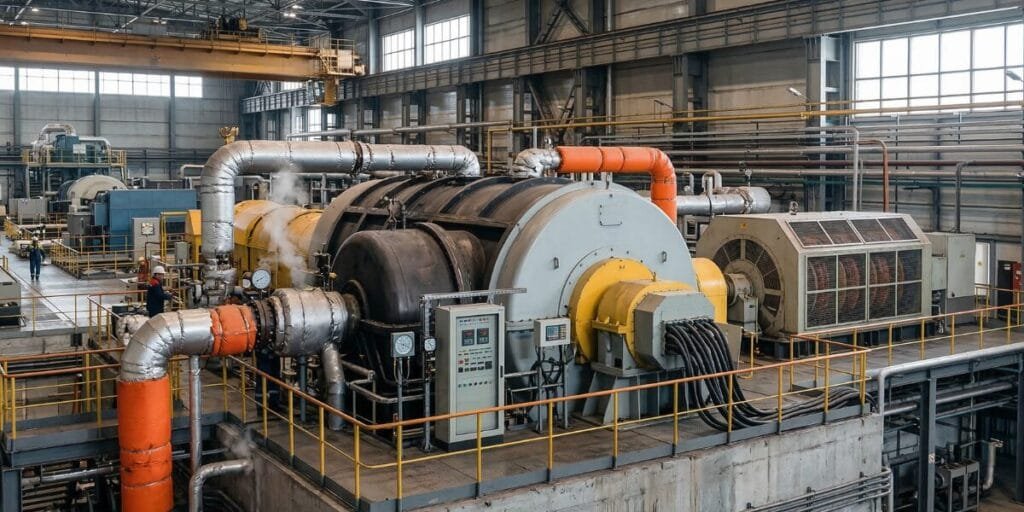
Turbomachinery and critical equipment: steam turbines, gas turbines, generators, process compressors, high-speed trains, equipment with plain or rolling-element bearings.
Process and utilities: auxiliary service water pumps, industrial HVAC, cooling towers, vacuum systems, compressed air, oil circuits, continuous process units.
Suitable plants: power generation, paper, food and beverage, cement, mining, metallurgy, oil & gas, desalination, chemical, automotive, ports, and plants with a high dependence on rotating assets.
Transmission and auxiliaries: pulleys, belts, gears, intermediate shafts, cardan shafts, baseplates, and supports.

Case Study:
Explore a real vibration analysis case in an industrial environment and the value it provides in operational continuity, maintenance optimization, and data-driven decision-making.
Frequently Asked Questions
Normally not. Most of the value of vibration analysis is obtained with the machine in operation, since this allows its actual behavior under load to be observed. Only some complementary checks may require shutdown.
It depends on criticality, failure mode, and operating regime. On critical equipment it may be weekly, monthly, or even continuous; on less critical equipment, every two months or quarterly may be sufficient.
No. It is a very powerful technique for rotating machinery, but it delivers the best results when integrated with thermography, ultrasound, oil analysis, alignment, and process context.
Yes. The usual approach is to start with a criticality analysis to prioritize the assets that have the greatest impact on production, safety, or cost. This makes it possible to design an efficient and scalable route, focusing first on the equipment where the technical and economic return is greatest.
It is advisable to measure at the machine’s main supports, normally at the bearing housings and in the horizontal, vertical, and axial directions when justified by criticality. Good measurement point placement improves repeatability, enables trend comparison, and helps detect defects such as unbalance, misalignment, looseness, or bearing failures more reliably.
In addition to overall vibration, FFT spectra, waveforms, trends, harmonics, bearing-related frequency bands, and, where applicable, phase, real-time signals, or advanced tests are analyzed. This is important because the overall value alone may not distinguish between unbalance, misalignment, or a gear defect.
Industrial Sectors